
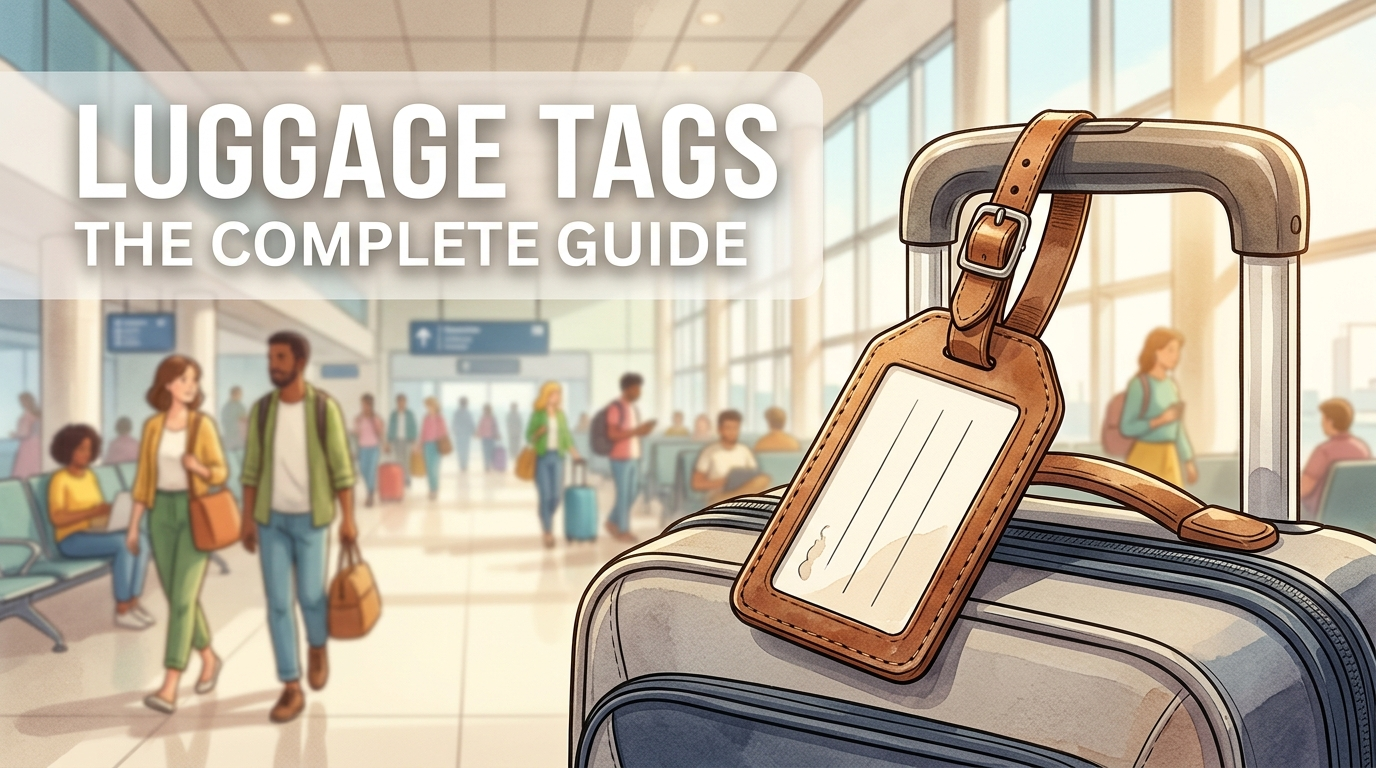
A luggage tag is the small piece of ID that makes the difference between a briefly misplaced bag and a lost one. When your suitcase looks like thousands of others on the carousel, a clear, durable tag is what lets an airline, a hotel, or a fellow traveller get it back to you. The best ones are sturdy, easy to read, and reveal just enough to reach you without giving away your home to a stranger.
This guide covers everything worth knowing before you buy: why tags still matter, the different types and which suits your travel style, exactly what to write on one (and what to leave off for safety), and the small habits that stop a tag disappearing mid-trip. By the end you'll know how to choose one you'll actually keep on your bag for years.

Why You Still Need a Luggage Tag
It's tempting to think a luggage tag is old-fashioned in the age of tracking devices, but the two do completely different jobs. A tracker tells you where your bag is; a tag tells everyone else whose bag it is. When an airline reunites a mishandled bag with its owner, the first thing they look for is contact details on the outside — and a bag with no ID is far harder and slower to return.
Tags earn their place in the everyday moments, too. They help you spot your bag instantly on a crowded carousel, stop someone walking off with a lookalike case, and identify your luggage at a hotel bell desk or on a tour bus. For the small cost and effort, a good tag is one of the highest-value pieces of travel gear you can own — which is exactly why it belongs on the checklist alongside the rest of your must-have luggage accessories.

The Main Types of Luggage Tag
Not all tags are equal. The right one balances durability, looks, and how much information it shows. Here are the main styles.
Leather luggage tags
Leather is the classic choice for good reason: it's hard-wearing, looks smart, and ages well. A quality leather tag survives years of being thrown around baggage holds without cracking or fading like cheap plastic does. Most have a covered window or back so your details stay private until someone flips it over. If you want one tag that lasts and looks the part, leather is the pick — the Leather Custom Luggage Tag is a durable, understated option with a secure fastening.
Silicone and PVC tags
Bright, flexible, and cheap, silicone tags are practically indestructible and come in bold colours that make a bag easy to spot. They're a good budget option and great for kids' bags, though they look less refined than leather and can feel bulky. If visibility is your priority over style, a vivid silicone tag does the job.
Personalised and photo-ID tags
Personalised tags — monogrammed, printed with a name, or featuring a slot for a business card — add a bit of individuality and make your bag unmistakably yours. They're popular as gifts and for frequent flyers who want a consistent look across a luggage set. Just make sure any personalisation still leaves room for the practical details that actually help return the bag.
Tags for kids and families
For family trips, matching or brightly coloured tags help children identify their own bags and help you keep track of everyone's luggage at once. Kids' tags are usually silicone for durability and often come in fun designs — a small thing that makes a big difference when you're wrangling a family through an airport.

What to Actually Write on a Luggage Tag
This is where most people get it wrong — either leaving a tag blank or, at the other extreme, putting their full home address on display for anyone to read. The goal is to be reachable without oversharing.
Do include:
Your name (or just a surname and initial if you prefer).
A mobile phone number, ideally with the international dialling code so it works overseas.
An email address — a reliable way to reach you that doesn't change.
Your destination hotel or contact while travelling, if you want an extra option.
Leave off:
Your full home address. A tag broadcasting that you're away, plus where you live, is an open invitation. A phone number and email are enough for anyone to reach you.
Any sensitive detail you wouldn't want a stranger reading at a glance.
Choose a tag with a covered info panel — a flap or backing that hides your details until someone deliberately turns it over. That way your information is there when it's needed but not on show to every passer-by. This is the same privacy-minded thinking behind our advice on not advertising too much about yourself while travelling.
How to Stop Your Tag Falling Off
A tag is only useful if it's still attached when your bag comes off the plane. The flimsy loops that come with cheap tags are the first thing to fail — snagged in a conveyor or snapped under a heavy pull. A few habits keep yours in place:
Choose a sturdy fastening. A thick strap, a steel cable loop, or a solid buckle lasts far longer than a thin plastic loop. This is where quality tags earn their keep.
Attach it to a strong point. Loop it through a solid handle rather than a zip pull or a delicate strap that can tear away.
Add a backup. Pop a second tag on a different part of the bag, or slip an ID card inside, so you're covered if the outer tag is lost.
Check it before every trip. Ten seconds to confirm the tag is secure and your details are still legible saves a lot of grief later.
Luggage Tags vs Bluetooth Trackers: Do You Need Both?
Bluetooth trackers like AirTags have become popular, and they're genuinely useful — but they don't replace a tag. A tracker shows you where your bag is on a map; it can't tell an airline who to call. If your bag is delayed, staff physically reunite it with you using the contact details on the outside, not a tracker they can't access.
The smartest approach is both: a tracker inside so you always know where your bag is, and a clear tag outside so anyone who finds it can return it. They complement each other rather than compete. For the full rundown of what's worth carrying, our guide to the best luggage accessories puts tags in context with the rest of your kit.
Frequently Asked Questions
What should you write on a luggage tag?
Include your name (or surname and initial), a mobile number with international dialling code, and an email address. Optionally add your destination hotel. Do not put your full home address on a luggage tag — it tells strangers you're away and where you live. Choose a tag with a covered panel so your details stay private until someone turns it over.
Are luggage tags still necessary if I have an AirTag?
Yes. An AirTag tells you where your bag is, but it can't tell an airline or a finder who to contact. When staff reunite a mishandled bag with its owner, they use the contact details on the outside. The best setup is both — a tracker inside and a clear ID tag outside.
What is the best type of luggage tag?
For most travellers a leather tag is the best all-rounder: durable, smart-looking, and usually fitted with a covered info panel and a sturdy fastening. Silicone tags are a cheaper, brightly coloured option that suit kids' bags and easy spotting. The best tag is the one that's hard-wearing, easy to read, and keeps your details private.
How do I stop my luggage tag from falling off?
Choose a tag with a strong fastening — a thick strap, steel cable, or solid buckle rather than a thin plastic loop. Attach it to a sturdy handle rather than a zip pull, add a second tag or an ID card inside the bag as backup, and check it's secure before every trip.
Should luggage tags have your address?
No — avoid putting your full home address on a luggage tag. It signals to strangers that your home is empty while you travel. A mobile number and email address are enough for anyone to reach you, and a tag with a covered panel keeps even those details out of casual view.
Choose a Tag You'll Keep for Years
A good luggage tag is a tiny investment that quietly does one important job: getting your bag back to you. Pick one that's durable, easy to read, and fitted with a covered panel and a sturdy fastening, write your contact details on it (but never your home address), and check it before every trip. Do that and you'll never watch an unmarked bag go round the carousel wondering if it's yours.
Ready to tag your bags properly? The Leather Custom Luggage Tag pairs a hard-wearing leather finish with a secure fastening and a privacy-minded info panel — backed by our 2-year warranty, 30-day money-back guarantee, and free shipping, from a proudly Aussie-owned team trusted by over 300,000 travellers. Explore the full luggage protection range to finish your setup.

Leave a comment
This site is protected by hCaptcha and the hCaptcha Privacy Policy and Terms of Service apply.