
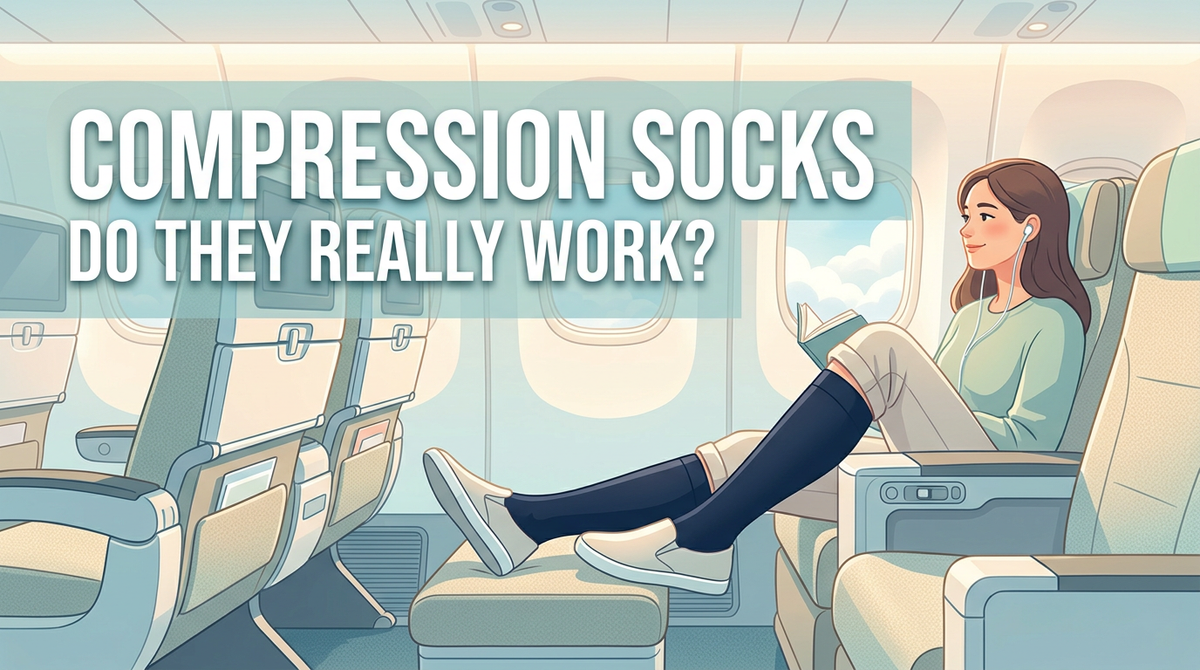
Yes — compression socks genuinely work on long flights, and the evidence backs it up. By gently squeezing your lower legs, they help your circulation push blood back up toward your heart, which reduces the swelling, aching, and heavy-legged feeling that comes from sitting still for hours. For long-haul travellers they're one of the simplest, most effective comfort and health items you can pack.
This guide explains how they work, what the research actually says, how to choose the right compression level, when to put them on, and who benefits most. It's written to help you make an informed choice — not as medical advice, so if you have a specific health condition, always check with your doctor first.

How Compression Socks Work
When you sit still for a long time — exactly what a long flight forces you to do — blood tends to pool in your lower legs and feet. That pooling is what causes the swelling and heaviness you feel after hours in a seat. Compression socks apply graduated pressure: tightest at the ankle and gradually looser up the calf. That gradient gently encourages blood to flow back up your legs rather than settling, keeping your circulation moving even while you're seated.
Better circulation means less fluid pooling, so your legs feel lighter and less swollen when you land. It also matters for a more serious reason: long periods of immobility raise the risk of deep vein thrombosis (DVT), a blood clot that can form in the deep veins of the legs. By helping maintain blood flow, compression socks are a recognised way to reduce that risk on long flights, which is why they're a core part of staying comfortable and healthy on a long-haul trip.

Do They Really Work? What the Evidence Says
This is the honest part: for the everyday traveller, the benefit you'll actually notice is comfort. Research consistently shows that wearing compression socks on long flights reduces leg swelling, and reviews of flight studies have found they lower the incidence of symptomless clots in the general travelling population. That's a real, measurable effect — not marketing.
What they're not is a magic guarantee. Compression socks are one layer of protection, and they work best alongside the other things that keep your blood moving: getting up to walk, doing seated leg exercises, and staying hydrated. Think of them as the easy, passive part of a circulation routine that also includes those active habits. For the full in-flight routine they fit into, see our guide on how to survive a long-haul flight, and once you land, beating jet lag is the natural next step to arriving ready to go.
It's also worth setting expectations on what "working" feels like. You won't notice compression socks doing anything dramatic mid-flight — the benefit is in what doesn't happen. You step off the plane without the tight, swollen ankles and heavy legs you might normally feel, and that difference is most obvious on the longest flights and on the walk through the terminal afterwards.
Choosing the Right Compression Level
Compression is measured in mmHg (millimetres of mercury), shown as a range. For travel, you don't need heavy medical-grade compression — the moderate levels are designed exactly for this.
15–20 mmHg is the sweet spot for most travellers. It gives a firm, effective squeeze that noticeably reduces swelling and fatigue, while still being comfortable to wear for a whole flight and easy to get on and off.
8–15 mmHg is a lighter, everyday level — fine for shorter flights or if you simply prefer a gentler feel.
20–30 mmHg and above is medical-grade compression. It's genuinely helpful for some people, but it should only be worn on the advice of a doctor, particularly if you have a diagnosed circulation condition.
For general long-haul travel, a quality pair in the 15–20 mmHg range like our Travel Compression Socks hits the balance most people want: effective enough to make a real difference, comfortable enough to forget you're wearing them.

When to Put Them On (and Take Them Off)
Timing matters more than people realise. Put your compression socks on before you fly — ideally in the morning before your legs have started to swell, or at the very least before you board. Pulling them on once your feet are already puffy mid-flight is harder and less effective.
Keep them on for the duration of the flight, and it's fine to leave them on for a while after landing, especially if you've got onward travel or a long transfer. On ultra-long-haul routes, they're comfortable to wear the whole way. The one habit that helps: put them on with clean, dry feet and make sure they're pulled up smoothly with no bunching, which can create a tight band that does the opposite of what you want.
Who Benefits Most from Compression Socks?
Everyone gets the comfort benefit on a long flight, but some travellers have extra reason to wear them:
Anyone on a long-haul flight — the longer you're seated, the more you'll feel the difference.
Travellers prone to swollen ankles or tired, achy legs when flying.
Pregnant travellers, who are more prone to swelling and clots — though pregnancy is exactly the case where you should check with your doctor first about whether and what level to wear.
People with a higher DVT risk — older travellers, those with certain medical histories, or anyone who's had clots before. Again, this is a conversation to have with your doctor.
Frequent flyers, who benefit from making circulation care a routine part of every trip.
If you fall into one of the medical categories above, compression socks are likely to help — but the right move is to confirm the details with a healthcare professional rather than self-prescribing a compression level.
Getting the Most From Your Socks
A good pair of travel compression socks will last many trips if you look after them, and a few small habits make them more effective too. Wash them in cool water and air-dry rather than tumble-drying, which preserves the elastic that does the compression work — socks that have lost their stretch have lost their point. Pack a spare pair in your carry-on on ultra-long-haul trips so you can change into fresh socks partway, and roll them rather than cramming them so the fabric keeps its shape.
The most common mistake is buying a pair that's the wrong size. Compression socks are sized by shoe size and often calf measurement, and a sock that's too small becomes uncomfortably tight while one that's too big won't deliver proper graduated pressure. Check the sizing guide before you buy rather than guessing — the fit is what makes the compression work.
Frequently Asked Questions
Do compression socks really work for flying?
Yes. Research shows compression socks reduce leg swelling on long flights and lower the incidence of symptomless clots in travellers. They work by applying graduated pressure that helps blood flow back up your legs instead of pooling. They're most effective combined with walking, seated leg exercises, and staying hydrated.
What mmHg compression socks are best for flying?
For most travellers, 15–20 mmHg is the ideal range — firm enough to reduce swelling and fatigue, comfortable enough to wear for a whole flight. Lighter 8–15 mmHg socks suit shorter flights or a gentler feel. Medical-grade 20–30 mmHg and above should only be worn on a doctor's advice.
When should I put on compression socks for a flight?
Put them on before you fly — ideally in the morning before your legs swell, or at least before boarding. They're harder to fit and less effective if you wait until your feet are already puffy mid-flight. Keep them on for the whole flight and, if you like, for a while after landing.
Can you wear compression socks if you're pregnant?
Many pregnant travellers do, as pregnancy increases the risk of swelling and clots. However, pregnancy is exactly the situation where you should check with your doctor first about whether to wear them and what compression level is appropriate for you.
How tight should travel compression socks be?
They should feel firm and supportive but not painful, and never leave deep marks or cut off circulation. Graduated socks are tightest at the ankle and looser up the calf. Make sure they're pulled up smoothly with no bunching, which can create a tight band. If a pair feels genuinely uncomfortable or numbing, the compression level is too high for you.
A Simple Step to Land Feeling Better
Compression socks are a small, inexpensive item that makes a genuine difference on a long flight — less swelling, lighter legs, and a lower clot risk, all for the effort of pulling on a pair of socks before you board. For most travellers a comfortable 15–20 mmHg pair is all you need; if you have a medical condition, just check the details with your doctor first.
Ready to fly more comfortably? Our Travel Compression Socks deliver the traveller-friendly 15–20 mmHg compression that keeps your legs feeling fresh from take-off to touchdown — backed by our 2-year warranty, 30-day money-back guarantee, and free shipping, from a proudly Aussie-owned team trusted by over 300,000 travellers. Pair them with the rest of your long-haul routine and you'll land ready to go.
This article is general information, not medical advice. If you have a health condition or specific concerns about circulation, DVT, or wearing compression garments, consult a qualified healthcare professional.

Leave a comment
This site is protected by hCaptcha and the hCaptcha Privacy Policy and Terms of Service apply.